



How Does a Cooling Pad Making Machine Work?
2026-05-14 16:08
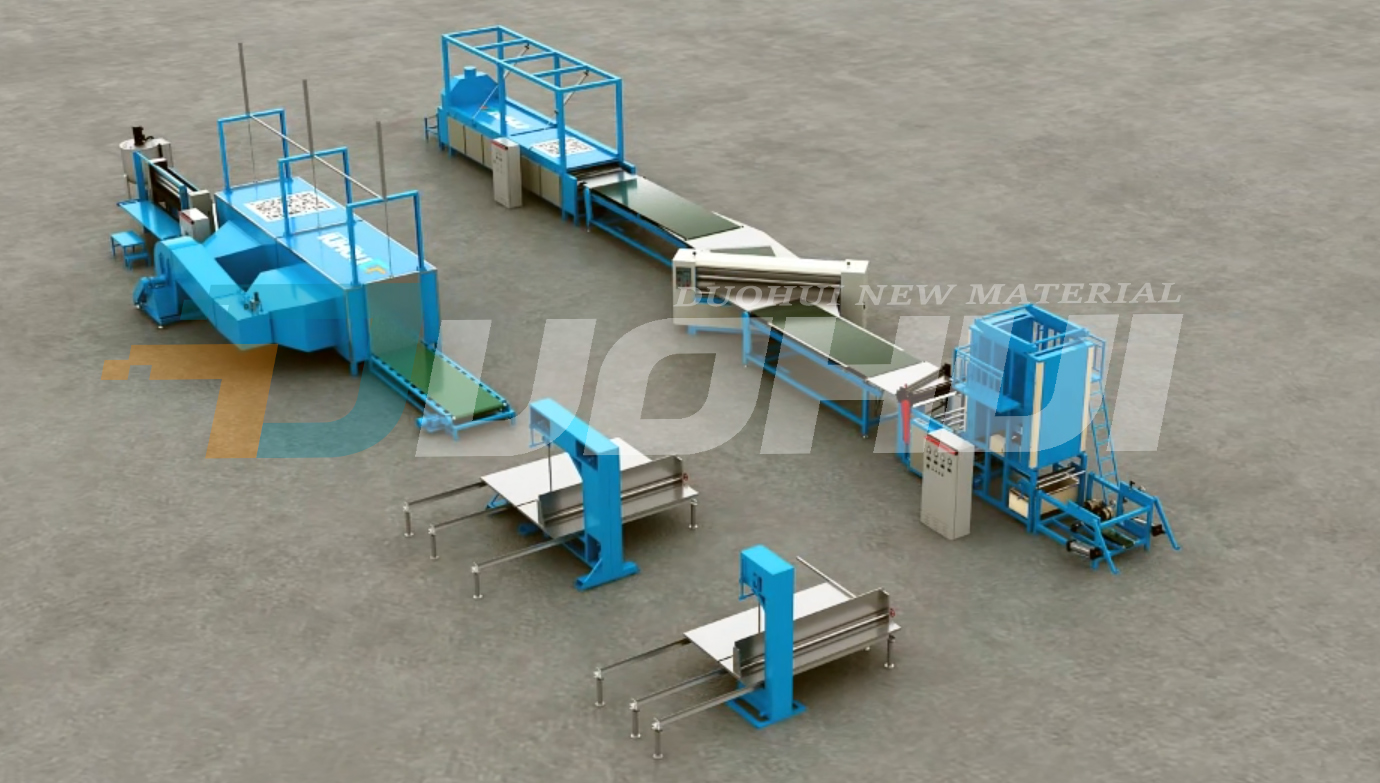
How Does a Cooling Pad Making Machine Work? Working Principle Explained
In modern industrial ventilation and evaporative cooling systems, the cooling pad making machine plays a key role in producing high-efficiency evaporative cooling pads widely used in greenhouses, livestock farms, industrial workshops, and HVAC cooling systems.
As global demand for energy-saving cooling solutions continues to increase, understanding the working principle of a cooling pad production machine helps manufacturers improve production efficiency and product quality.
What Is a Cooling Pad Making Machine?
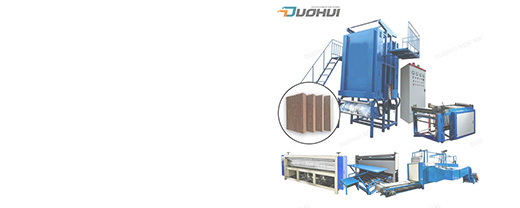
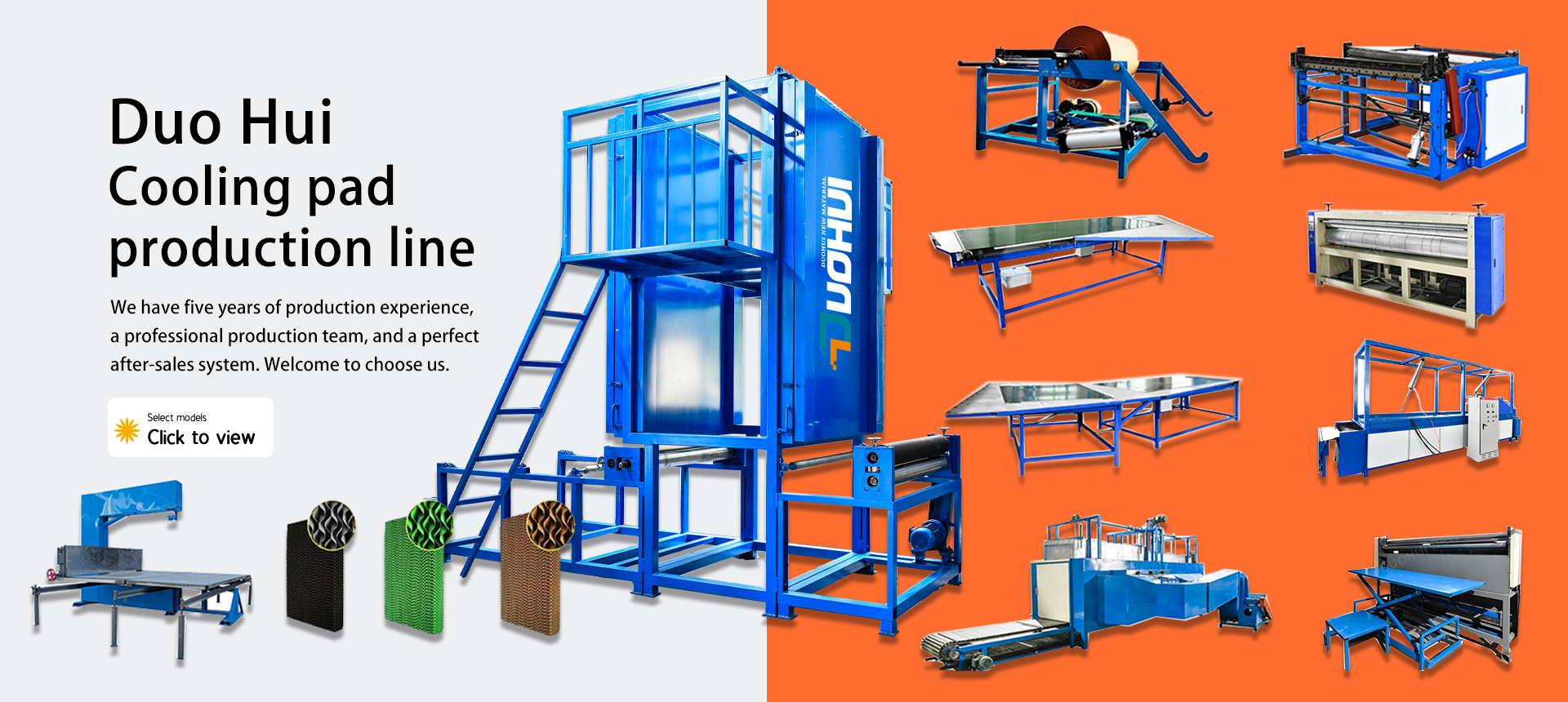
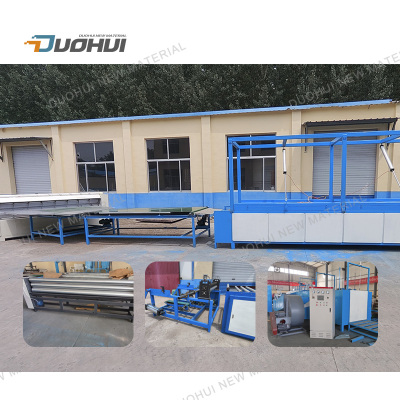
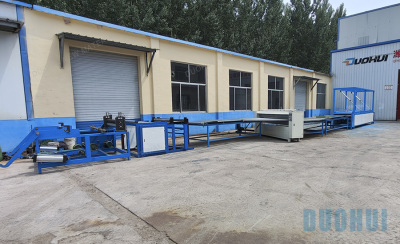
A cooling pad making machine is an automated industrial production line designed to manufacture evaporative cooling pads (also known as wet curtains or cooling pad paper).
These cooling pads are made from:
High-strength kraft paper
Special anti-corrosion resin
Water-absorbing fiber materials
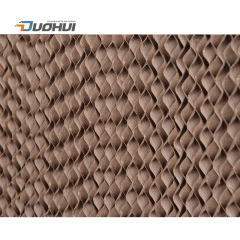
The machine converts raw paper into a corrugated honeycomb structure, which provides excellent water absorption and air cooling performance.
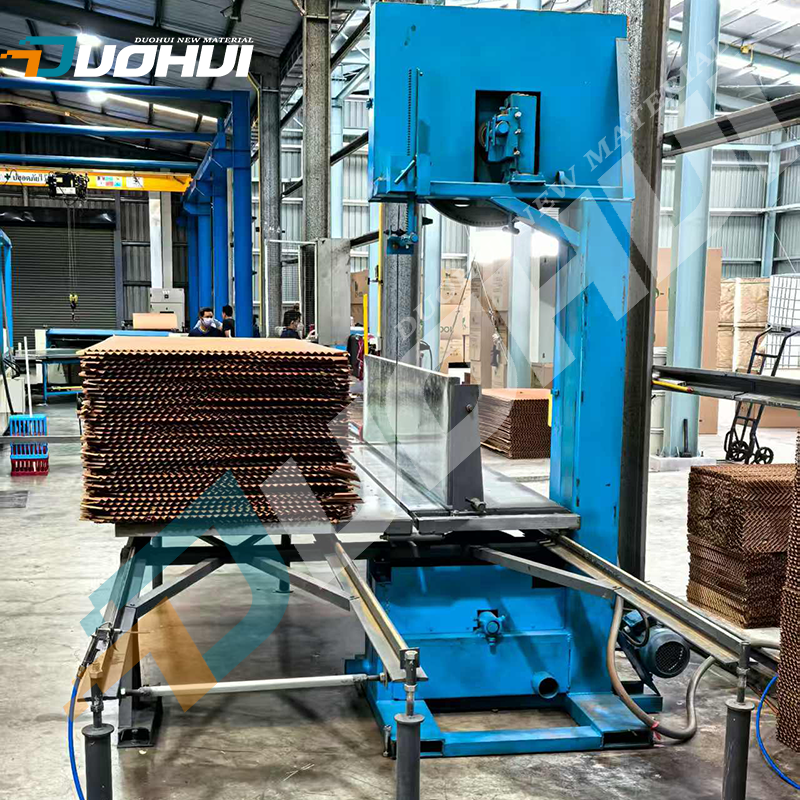 How Does a Cooling Pad Making Machine Work?
The working process is a continuous automated system that includes paper feeding, corrugation, glue coating, stacking, pressing, and drying.
1. Paper Feeding Process
The production begins with kraft paper rolls being automatically fed into the machine.
Paper rolls are unwound continuously
Tension control ensures stable feeding
Multi-layer paper preparation for forming
This ensures smooth and uninterrupted production.
2. Corrugation Process (Wave Forming)
The paper passes through corrugation rollers to form wave shapes.
Heated rollers shape the paper into a corrugated structure
Different roller designs control wave height and angle
Increases surface area for better cooling efficiency
This step determines the core structure of the cooling pad.
3. Glue Coating Process
After corrugation, a special adhesive is applied.
Uniform resin glue coating system
Controlled glue thickness
Ensures strong bonding between layers
This improves durability and water resistance.
4. Stacking and Pressing Process
Corrugated sheets are stacked and pressed into a honeycomb structure.
Sheets are arranged in cross-direction (45°–90° angles)
Hydraulic or mechanical pressing system
Forms a stable and uniform structure
This structure is essential for evaporative cooling performance.
5. Drying and Curing Process
The final stage is drying and curing.
Material passes through a drying system
Moisture is removed completely
Resin is fully cured and hardened
After this process, the cooling pad becomes strong and ready for cutting and packaging.
Main Components of a Cooling Pad Making Machine
Paper Feeding System
Ensures stable and continuous raw material supply.
Corrugation Rollers
Form the wave-shaped structure of cooling pad paper.
Glue Application System
Applies uniform adhesive for strong bonding.
Laminating and Pressing Unit
Builds the honeycomb structure with precision.
Drying System
Improves product strength and long-term stability.
Where Are Cooling Pads Used?
Cooling pads produced by this machine are widely used in:
Greenhouse cooling systems
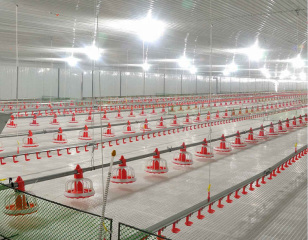
Poultry and livestock farms
Industrial ventilation workshops
HVAC evaporative cooling systems
Agricultural temperature control facilities
They are a cost-effective and energy-saving cooling solution.
What Are the Advantages of a Cooling Pad Making Machine?
✔ Fully automated production line
✔ High efficiency and stable output
✔ Precise corrugation forming system
✔ Strong and durable cooling pad structure
✔ Suitable for large-scale industrial manufacturing
Modern machines significantly reduce labor costs while improving product consistency and quality.
Conclusion
So, how does a cooling pad making machine work? It operates through a continuous automated process that integrates paper feeding, corrugation, gluing, pressing, and drying technologies to produce high-quality evaporative cooling pads.
With increasing global demand for energy-efficient cooling systems, this equipment plays an important role in modern industrial and agricultural ventilation solutions.
Related News
More >-
![Is Buying a Used Cooling Pad Production Line the Smartest Way to Reduce Your Production Costs?]()
Is Buying a Used Cooling Pad Production Line the Smartest Way to Reduce Your Production Costs?
As the global demand for evaporative cooling pads continues to grow, more manufacturers are looking for cost-effective ways to expand production. Instead of investing in brand-new machinery, many businesses are turning their attention to a used cooling pad production line. But is purchasing second-hand equipment really a smart investment?
-
![Evaporative cooling pad production line for Egypt]()
Evaporative cooling pad production line for Egypt
Manufacturing honeycomb pads for air cooler pads involves specialized machinery and processes tailored to create the intricate honeycomb structure that maximizes surface area for efficient cooling.
-
![Honeycomb cooling pads making machine production line]()
Honeycomb cooling pads making machine production line
Manufacturing honeycomb pads for air cooler pads involves specialized machinery and processes tailored to create the intricate honeycomb structure that maximizes surface area for efficient cooling.
-
![Evaporative cellulose cooling pad making machine line]()
Evaporative cellulose cooling pad making machine line
To manufacture evaporative cellulose cooling pads, specialized machinery is required to handle the unique properties of cellulose material and to ensure precise production of cooling pads.
-
![Honeycomb cooling pad production line factory]()
Honeycomb cooling pad production line factory
Manufacturing honeycomb pads for air cooler pads involves specialized machinery and processes tailored to create the intricate honeycomb structure that maximizes surface area for efficient cooling.
-
![Honeycomb cooling pad production line]()
Honeycomb cooling pad production line
Manufacturing honeycomb pads for air cooler pads involves specialized machinery and processes tailored to create the intricate honeycomb structure that maximizes surface area for efficient cooling.
-
![Honeycomb cooling pad making machine cellulose pad production line]()
Honeycomb cooling pad making machine cellulose pad production line
Manufacturing honeycomb pads for air cooler pads involves specialized machinery and processes tailored to create the intricate honeycomb structure that maximizes surface area for efficient cooling.
-
![Cellulose Pad Making Machine Evaporative Cooling Pad Production]()
Cellulose Pad Making Machine Evaporative Cooling Pad Production
A cellulose pad making machine is a piece of equipment used in the manufacturing process of evaporative cooling pads. These pads are commonly used in greenhouse and poultry farming applications to provide cooling by harnessing the natural process of evaporation.
Get the latest price? We'll respond as soon as possible(within 12 hours)