



What Is a Cooling Pad Production Line? How Does It Work and How to Choose the Right Machine?
2026-08-17 09:50
What Is a Cooling Pad Production Line? How Does It Work and How to Choose the Right Machine?
Evaporative cooling pads are widely used in poultry farms, livestock houses, greenhouses, industrial workshops, warehouses, and other facilities that require efficient air cooling and ventilation.
As demand for energy-efficient cooling systems continues to grow, manufacturers are increasingly looking for automated cooling pad production lines that can produce high-quality evaporative cooling pads efficiently and consistently.
But what exactly is a cooling pad production line? How does it work? What equipment is required to manufacture cooling pads? And how can manufacturers choose the right production line for their factory?
This guide explains the cooling pad manufacturing process, production line equipment, applications, benefits, and key factors to consider when purchasing a cooling pad production line.
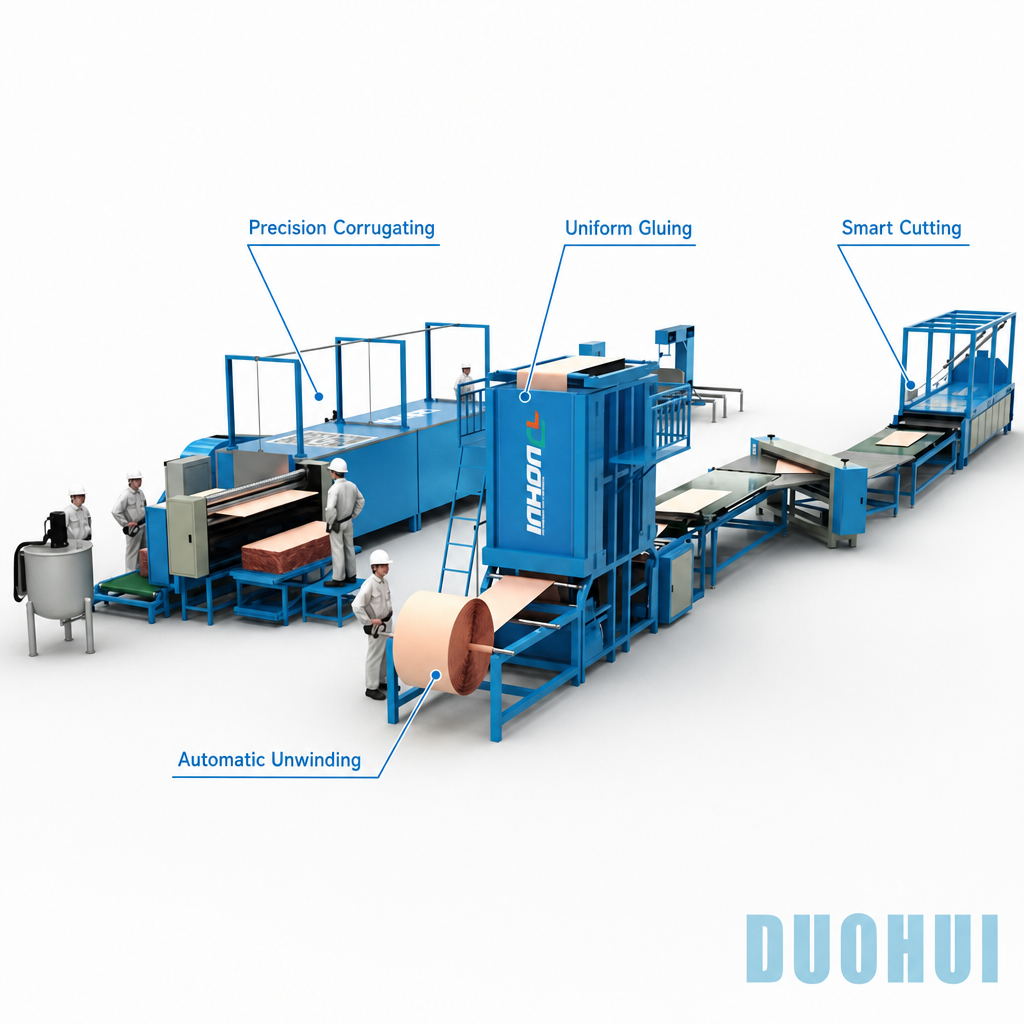
What Is a Cooling Pad Production Line?
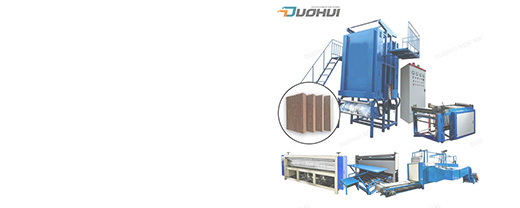
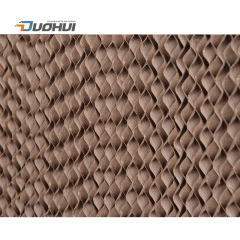
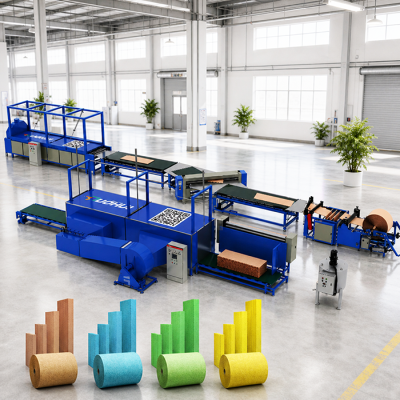
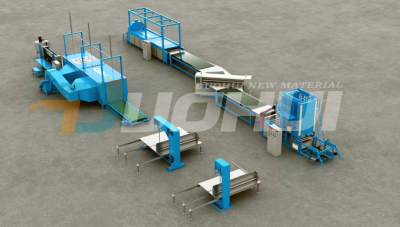
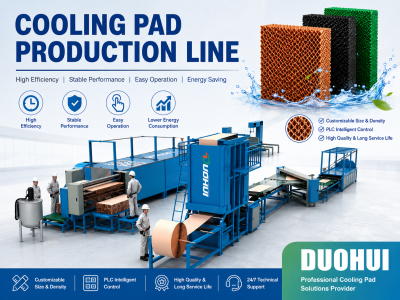
A cooling pad production line is a complete manufacturing system used to produce evaporative cooling pads, typically made from specially treated corrugated cellulose paper.
The production line combines multiple processes, including paper preparation, corrugation, gluing, laminating or stacking, forming, curing, cutting, and packaging.
Depending on the production capacity and product specifications, a cooling pad production line can be semi-automatic or fully automatic.
A complete production system helps manufacturers improve production efficiency, maintain consistent product dimensions, reduce manual labor, and produce cooling pads suitable for agricultural and industrial cooling applications.
What Are Evaporative Cooling Pads?
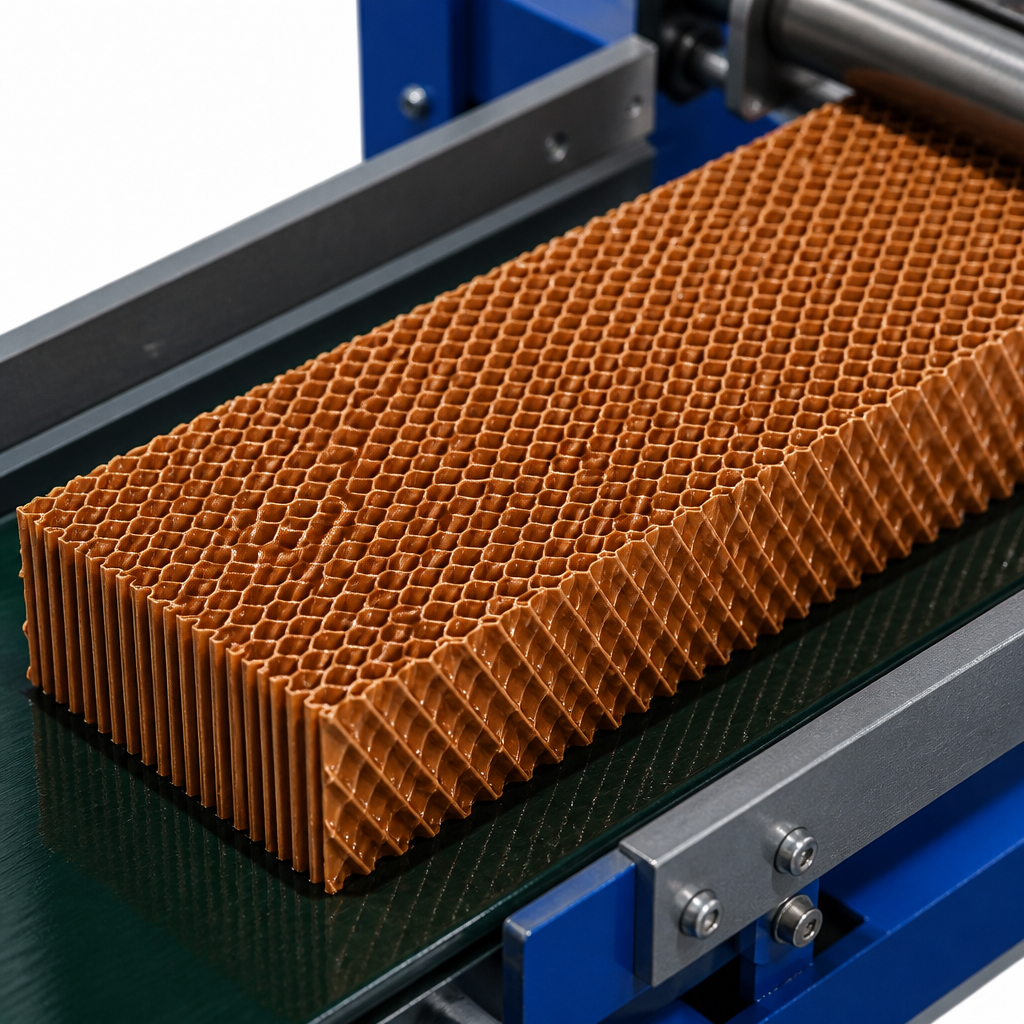
Evaporative cooling pads are cooling media used in evaporative cooling systems.
When hot air passes through a wet cooling pad, water absorbs heat from the air as it evaporates. This process reduces the temperature of the incoming air and increases humidity.
Evaporative cooling systems are commonly used in areas where efficient ventilation and cooling are required.
Typical applications include:
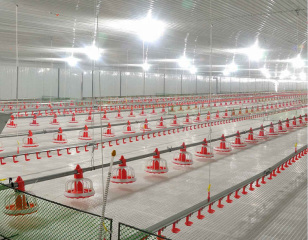
Poultry farms
Dairy farms
Pig farms
Greenhouses
Industrial workshops
Warehouses
Agricultural buildings
Commercial ventilation systems
The cooling performance of the pad depends on factors such as paper quality, corrugation structure, pad thickness, wetting characteristics, airflow resistance, and manufacturing quality.
How Does a Cooling Pad Production Line Work?
Although production line configurations vary between manufacturers, the general cooling pad manufacturing process includes several major stages.
1. Raw Material Preparation
The main raw material for many evaporative cooling pads is specially treated cellulose paper.
The paper needs to have suitable strength, absorbency, water resistance, and wetting characteristics.
Before production begins, the raw material is prepared and fed into the production system according to the required pad specifications.
2. Paper Corrugation
Corrugation is one of the most important processes in cooling pad manufacturing.
The paper is processed into a corrugated structure that creates channels for air and water to pass through.
The corrugated geometry influences the contact area between air and water, airflow resistance, water distribution, and overall cooling performance.
Different cooling pad models may use different flute or corrugation configurations depending on the final application.
3. Glue Application
After corrugation, adhesive is applied to selected areas of the paper.
The adhesive allows individual corrugated sheets to be bonded together to form a stable cooling pad structure.
Consistent glue application is important because insufficient or excessive adhesive can affect the strength and performance of the finished product.
4. Paper Stacking and Bonding
The corrugated sheets are stacked and bonded together according to the required pad dimensions.
This process determines the overall thickness, height, width, and structure of the cooling pad.
Automated equipment can improve stacking accuracy and production consistency.
5. Forming and Pressing
The stacked paper is formed and pressed to achieve the required shape and structural strength.
The production parameters need to be controlled carefully to prevent deformation and maintain consistent dimensions.
6. Curing
After bonding and forming, the cooling pad needs sufficient curing time to allow the adhesive to stabilize.
Depending on the production line design and adhesive system, curing can be performed under controlled environmental conditions or through dedicated equipment.
Proper curing helps ensure that the finished cooling pad maintains its structural integrity during long-term use.
7. Cutting and Trimming
The formed cooling pad is cut to the required dimensions.
A precise cutting system helps manufacturers produce cooling pads with consistent dimensions for installation in different evaporative cooling systems.
8. Inspection and Packaging
The finished cooling pads are inspected before packaging.
Typical quality checks may include:
Dimensions
Bonding strength
Surface condition
Corrugation consistency
Structural integrity
Water absorption characteristics
Qualified products are then packaged and prepared for storage or shipment.
What Equipment Is Included in a Cooling Pad Production Line?
The exact equipment configuration depends on the production capacity and product specifications.
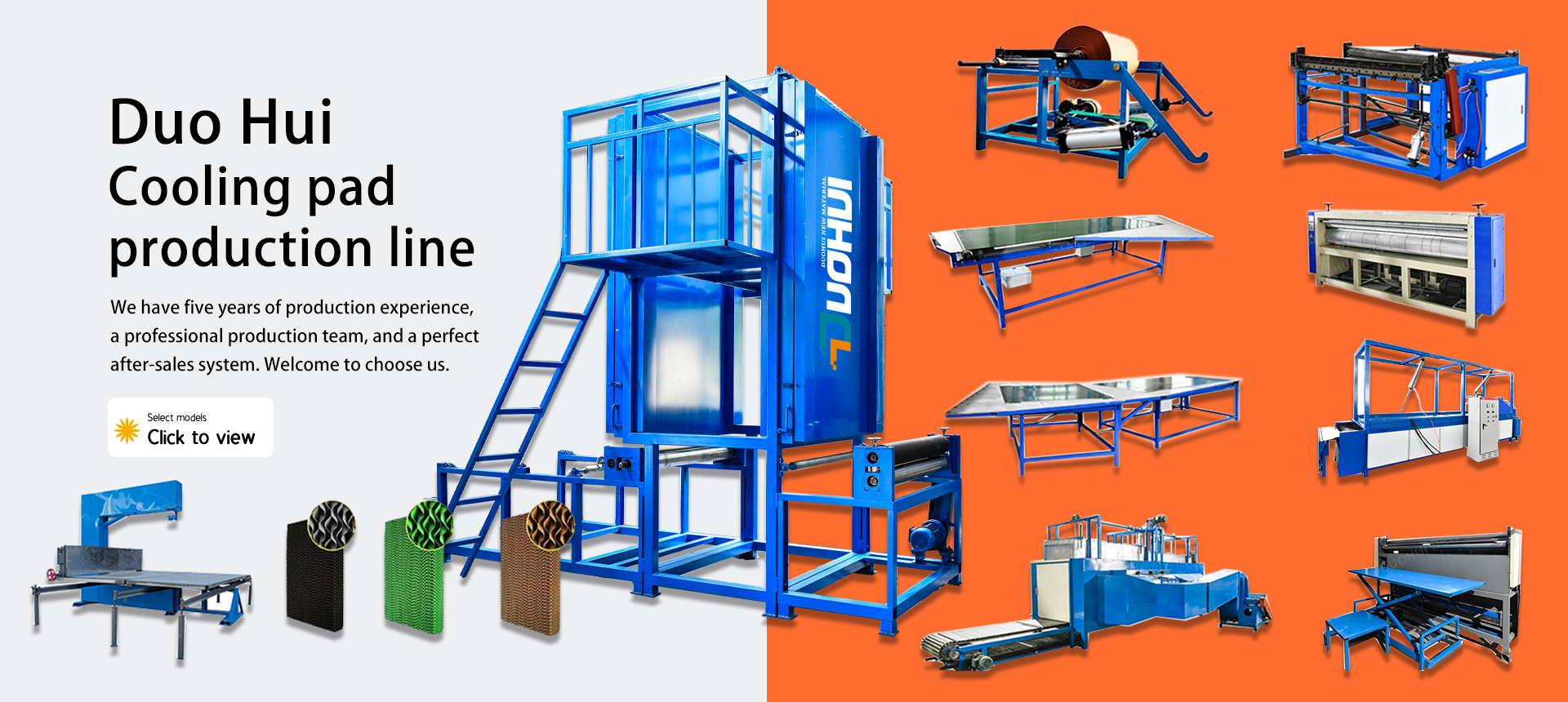
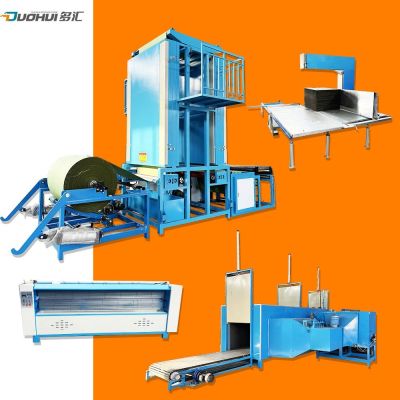
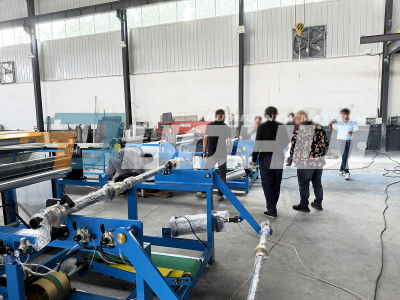
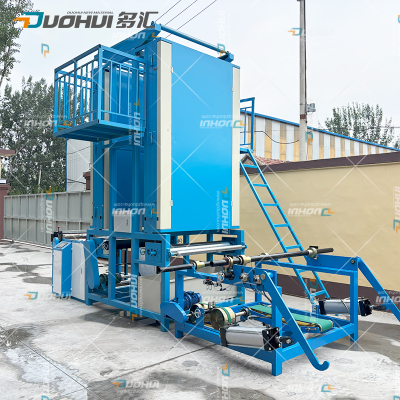
A typical cooling pad manufacturing line may include:
Paper Feeding System
The feeding system continuously supplies raw paper to the production equipment.
A stable feeding system helps maintain consistent production speed.
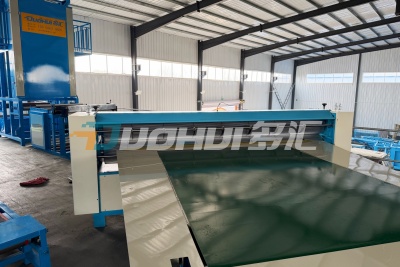
Corrugating Machine
The corrugating machine forms the required wave or flute structure in the cellulose paper.
This is a core component of the production line.
Glue Application System
The glue application system applies adhesive to the appropriate areas of the corrugated paper.
Accurate glue application helps maintain consistent bonding quality.
Stacking and Forming Equipment
This equipment stacks and forms individual paper sheets into the required cooling pad structure.
Pressing Equipment
The pressing system helps maintain the desired shape and dimensions during the bonding process.
Cutting Machine
The cutting machine trims the finished cooling pad to the specified size.
Drying or Curing System
Depending on the production technology, a drying or curing system may be used to stabilize the adhesive and improve production efficiency.
Packaging Equipment
Packaging equipment can be integrated into automated production lines to reduce manual handling and improve production efficiency.
What Are the Advantages of an Automatic Cooling Pad Production Line?
Manufacturers producing cooling pads on a large scale may benefit from automation in several ways.
Higher Production Efficiency
Automated production lines can continuously process raw materials and reduce interruptions between manufacturing stages.
This makes them suitable for manufacturers with high production requirements.
Consistent Product Quality
Automation can help maintain consistent paper feeding, corrugation, glue application, stacking, and cutting.
Consistent production parameters are important when manufacturing cooling pads for commercial applications.
Reduced Labor Requirements
A high degree of automation can reduce the amount of manual work required during production.
This may help manufacturers control labor costs and improve overall factory efficiency.
Flexible Production
Depending on the machine configuration, manufacturers may be able to produce cooling pads in different sizes and specifications.
This can help suppliers serve customers with different installation requirements.
Better Production Management
Automated systems can make it easier to monitor production speed, operating parameters, material consumption, and equipment performance.
Where Are Cooling Pads Used?
Cooling pads are widely used in evaporative cooling systems.
Poultry Farms
Poultry houses often require effective ventilation and temperature management.
Evaporative cooling pads can be installed together with exhaust fans to create a cooling and ventilation system.
Livestock Farms
Dairy farms and pig farms may also use evaporative cooling systems to improve the indoor environment during hot weather.
Greenhouses
Greenhouses can use cooling pads together with ventilation fans to reduce indoor temperatures and improve climate management.
Industrial Workshops
Evaporative cooling systems can be used in factories and workshops where traditional air-conditioning systems may be expensive or unsuitable for large open spaces.
Warehouses
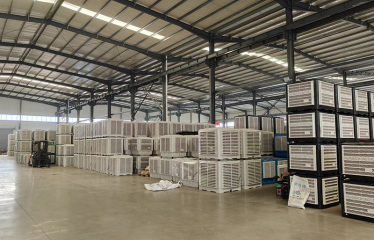
Large warehouses can use evaporative cooling solutions to improve ventilation and reduce indoor heat in suitable climates.
How to Choose a Cooling Pad Production Line?
Choosing the right cooling pad production line requires more than comparing machine prices.
Manufacturers should consider several important factors.
1. Production Capacity
Determine the required production output before selecting a machine.
A small manufacturer may need a compact or semi-automatic line, while a large manufacturer may require a high-speed automated production system.
2. Cooling Pad Specifications
Different markets may require different cooling pad sizes, thicknesses, corrugation structures, and configurations.
Make sure the production line can manufacture the products required by your target market.
3. Level of Automation
Consider whether you need:
Semi-automatic production
Fully automatic production
Integrated feeding and cutting
Automated stacking
Automated packaging
Higher automation may require a larger initial investment but can improve production efficiency.
4. Factory Space
The available factory area should be considered before purchasing equipment.
A complete production line may require sufficient space for raw material storage, machine installation, finished-product storage, and worker access.
5. Energy Consumption
Energy consumption is an important factor in long-term production costs.
Manufacturers should evaluate the power requirements of the complete production line rather than looking at individual machines only.
6. After-Sales Service
For industrial production equipment, technical support and spare parts availability are important.
Before purchasing a cooling pad manufacturing machine, buyers should confirm installation support, operator training, maintenance requirements, spare parts supply, and technical assistance.
How Much Does a Cooling Pad Production Line Cost?
The cost of a cooling pad production line depends on many factors, including production capacity, automation level, machine configuration, product specifications, and customization requirements.
A small semi-automatic line and a fully automatic industrial production line can have significantly different investment costs.
When calculating the total investment, manufacturers should consider:
Machine cost
Installation
Transportation
Factory preparation
Electrical requirements
Raw materials
Labor
Spare parts
Maintenance
Packaging
Production capacity
Therefore, the lowest equipment price does not necessarily represent the lowest long-term production cost.
Cooling Pad Production Line for International Markets
Evaporative cooling pads are used in many hot and humid regions around the world.
Markets in Southeast Asia, the Middle East, Africa, South Asia, and Latin America may have demand for evaporative cooling solutions in agricultural and industrial applications.
For international buyers, a cooling pad production line should be selected according to the target market.
Important considerations include:
Local climate
Poultry and livestock industry demand
Greenhouse applications
Cooling pad specifications
Available raw materials
Factory power supply
Production capacity
Local technical support
Manufacturers planning to export cooling pads should also consider producing multiple specifications to meet the requirements of different customers and markets.
What Is the Future of Cooling Pad Manufacturing?
As demand for energy-efficient cooling solutions increases, evaporative cooling technology continues to attract attention in agriculture and industrial ventilation.
For manufacturers, automation is becoming increasingly important.
Modern production lines can integrate material feeding, corrugation, gluing, forming, cutting, and other processes into a more efficient manufacturing system.
The future of cooling pad manufacturing is likely to focus on:
Higher production efficiency
Improved automation
Better product consistency
Reduced material waste
Lower labor requirements
Flexible product specifications
More efficient factory management
Conclusion
A cooling pad production line is a complete manufacturing system designed to produce evaporative cooling pads efficiently and consistently.
From raw material preparation and paper corrugation to gluing, stacking, forming, curing, cutting, inspection, and packaging, each stage plays an important role in the quality of the finished product.
For manufacturers planning to enter or expand in the evaporative cooling pad market, choosing the right cooling pad manufacturing machine is an important investment decision.
The best production line should match the manufacturer's required capacity, cooling pad specifications, automation level, factory space, budget, and target market.
With the right equipment and production process, manufacturers can improve production efficiency, maintain consistent product quality, and better serve the growing demand for evaporative cooling solutions.
Frequently Asked Questions
What is a cooling pad production line?
A cooling pad production line is a series of machines used to manufacture evaporative cooling pads from cellulose paper or other suitable materials.
What raw material is used to make cooling pads?
Cellulose paper is commonly used for evaporative cooling pads. The material is processed into a corrugated structure that allows air and water to interact effectively.
How are evaporative cooling pads manufactured?
The general process includes raw material feeding, paper corrugation, glue application, stacking, bonding, forming, curing, cutting, inspection, and packaging.
What industries use cooling pads?
Cooling pads are commonly used in poultry farms, livestock farms, greenhouses, industrial workshops, warehouses, and other buildings that use evaporative cooling systems.
Can a cooling pad production line produce different sizes?
Depending on the machine configuration, production lines can be designed or adjusted to manufacture cooling pads with different dimensions and specifications.
Is an automatic cooling pad production line worth the investment?
For manufacturers with high production volumes, automation can improve production efficiency, reduce manual labor, and provide more consistent product quality. The appropriate automation level depends on production requirements and investment budget.
SEO Information
SEO Title:
What Is a Cooling Pad Production Line? Complete Manufacturing Guide
Meta Description:
Learn how a cooling pad production line works, from paper corrugation and gluing to forming and cutting. Discover cooling pad manufacturing machines and how to choose the right production line.
Primary Keyword:
cooling pad production line
Secondary Keywords:
cooling pad manufacturing machine
cooling pad production machine
evaporative cooling pad production line
cooling pad manufacturing
cooling pad making machine
evaporative cooling pad machine
cooling pad production equipment
Long-Tail Keywords:
how to manufacture evaporative cooling pads
how does a cooling pad production line work
cooling pad production line manufacturer
automatic cooling pad production line
evaporative cooling pad manufacturing machine
cooling pad making machine for poultry farms
cooling pad production line for sale
how are evaporative cooling pads made
Suggested URL:/cooling-pad-production-line/
Suggested Image Alt Text:automatic cooling pad production line for evaporative cooling pads
Suggested Internal Links:
Cooling Pad Production Line
Cooling Pad Manufacturing Machine
Evaporative Cooling Pad
Poultry Farm Cooling System
Greenhouse Cooling System
Evaporative Cooling Pad Machine
Related News
More >-
![Focus on industry growth & automation]()
Focus on industry growth & automation
-
![Is Buying a Used Cooling Pad Production Line the Smartest Way to Reduce Your Production Costs?]()
Is Buying a Used Cooling Pad Production Line the Smartest Way to Reduce Your Production Costs?
As the global demand for evaporative cooling pads continues to grow, more manufacturers are looking for cost-effective ways to expand production. Instead of investing in brand-new machinery, many businesses are turning their attention to a used cooling pad production line. But is purchasing second-hand equipment really a smart investment?
-
![Thailand Customer Successfully Installs Cooling Pad Production Line and Produces High-Quality Cooling Pads]()
Thailand Customer Successfully Installs Cooling Pad Production Line and Produces High-Quality Cooling Pads
We are pleased to share another successful customer project. Recently, a Cooling Pad Production Line supplied by Weifang Duohui Intelligent Manufacturing Technology Co., Ltd. was successfully installed and commissioned at a customer's factory in Thailand.
-
![How Does a Cooling Pad Making Machine Work?]()
How Does a Cooling Pad Making Machine Work?
How Does a Cooling Pad Making Machine Work? Working Principle Explained
-
![What Makes a Cooling Pad Production Line Essential for Modern Evaporative Cooling Manufacturing?]()
What Makes a Cooling Pad Production Line Essential for Modern Evaporative Cooling Manufacturing?
-
![FSC Certified Evaporative Cooling Pad Wet Curtain Paper & Cooling Pad Kraft Paper: Driving Sustainable Cooling Solutions in 2026]()
FSC Certified Evaporative Cooling Pad Wet Curtain Paper & Cooling Pad Kraft Paper: Driving Sustainable Cooling Solutions in 2026
-
![Philippine Customers Visit Our Factory to Inspect Cooling Pad Production Line and Discuss In-depth Cooperation]()
Philippine Customers Visit Our Factory to Inspect Cooling Pad Production Line and Discuss In-depth Cooperation
Philippine Customers Visit Our Factory to Inspect Cooling Pad Production Line and Discuss In-depth Cooperation
-
![Integrated Manufacturing & Trading Direct Supply · Automated Production Line with Solid Quality Assurance]()
Integrated Manufacturing & Trading Direct Supply · Automated Production Line with Solid Quality Assurance
Integrated Manufacturing & Trading Direct Supply · Automated Production Line with Solid Quality Assurance
Get the latest price? We'll respond as soon as possible(within 12 hours)